

Sri Lanka's Former First Lady Shiranthi Rajapaksa Arrested Over Alleged Misuse of Children's Hospital Donations
Sri Lankan anti-corruption investigators have arrested Shiranthi Rajapaksa, the wife of former President Mahinda Rajapaksa, in connection with allegations that a charitable foundat
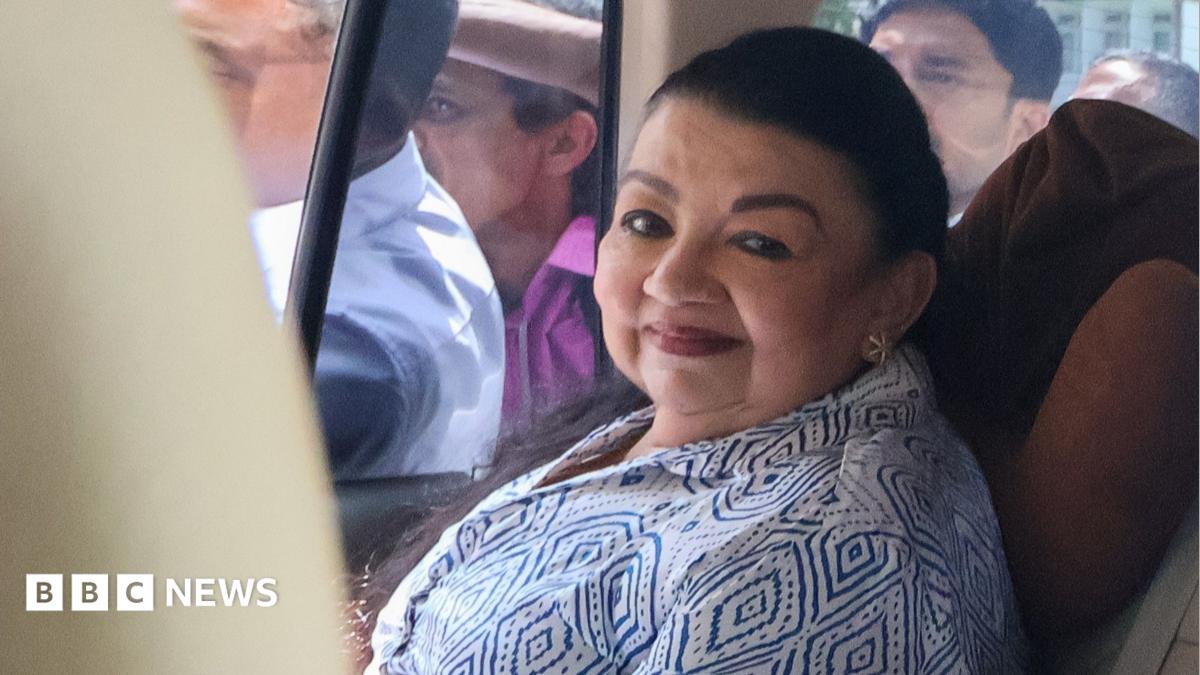
Sri Lankan anti-corruption investigators have arrested Shiranthi Rajapaksa, the wife of former President Mahinda Rajapaksa, in connection with allegations that a charitable foundation she is associated with diverted donations intended for a children's hospital. The 73-year-old former first lady was taken into custody at the family's residence in Colombo on Wednesday, according to officials familiar with the case.
The arrest marks a significant development in the ongoing scrutiny of the Rajapaksa family, which dominated Sri Lankan politics for nearly two decades. Shiranthi Rajapaksa's detention comes just two days after she returned to the island nation from Singapore, where she had been undergoing medical treatment. Authorities had been seeking to question her for months, but her absence abroad had complicated their efforts to proceed with the investigation.
At the center of the case is the Siriliya Saviya charity, a foundation linked to the former first lady. Investigators allege that approximately 10 million rupees—equivalent to about $30,300 or £22,800—was raised by the organization ostensibly to purchase a specialized scanner for Colombo's Lady Ridgeway Children's Hospital. However, officials contend that the equipment in question had already been provided to the hospital through a donation from the Chinese government, raising questions about how the charity funds were actually utilized.
The timing of the alleged fundraising and the subsequent Chinese donation has prompted anti-corruption authorities to examine whether donors were misled about the purpose of their contributions. The discrepancy between the stated objective of the fundraising campaign and the reality of the hospital's equipment needs forms the basis of the investigation, according to officials who spoke on condition of anonymity because they are not authorized to discuss active cases.
Shiranthi Rajapaksa has categorically denied any wrongdoing through her representatives. She maintains that the funds remain intact and have not been misappropriated. A spokesperson for former President Mahinda Rajapaksa, Manoj Gamage, echoed this position, stating that the money is safely held in Siriliya Saviya's bank accounts and that no fraudulent activity has taken place. Gamage characterized the allegations as politically motivated, though he did not provide specific evidence to support that claim.
The former first lady had sought to prevent her arrest by filing a petition with the courts, but the legal maneuver proved unsuccessful. A hearing on her petition had been scheduled for October 12, but authorities proceeded with the arrest before that date. Her legal team is expected to challenge the detention in the coming days, arguing that the investigation lacks merit and that their client has cooperated fully with authorities.
The arrest represents the latest chapter in a broader anti-corruption campaign targeting the Rajapaksa family, which has faced mounting legal challenges since losing power in 2022. President Anura Kumara Dissanayake's government has revived numerous long-dormant investigations into allegations of misconduct during the Rajapaksa era, signaling a renewed commitment to accountability that previous administrations had seemingly abandoned.
Mahinda Rajapaksa served as Sri Lanka's president from 2005 to 2015, a period during which his family exercised extraordinary influence over the country's political and economic institutions. He remains a polarizing figure in Sri Lankan politics. Many supporters credit him with ending the nation's nearly three-decade-long civil war in 2009, when government forces defeated the Tamil Tiger rebels. That military victory cemented his popularity among segments of the Sinhalese majority, particularly in rural areas.
However, his legacy has been significantly tarnished by allegations of corruption, nepotism, and human rights abuses. The Rajapaksa family's grip on power extended across multiple branches of government, with relatives occupying key ministerial positions and controlling important state institutions. Critics argue that this concentration of power created an environment where oversight was minimal and accountability virtually nonexistent.
The family's political fortunes suffered a dramatic reversal in 2022 when widespread protests erupted across Sri Lanka. Triggered by skyrocketing inflation and severe shortages of fuel, food, and medicine, the demonstrations represented a spontaneous outpouring of public anger against the government's handling of the economy. Mahinda's brother Gotabaya Rajapaksa, who was serving as president at the time, was eventually forced from office, becoming the first Sri Lankan head of state to be ousted by popular protest.
The current government's pursuit of corruption cases involving the Rajapaksa family has proceeded on multiple fronts. Earlier this year, Mahinda and Shiranthi's eldest son, Namal Rajapaksa, was arrested in connection with allegations related to an aircraft procurement deal that occurred during his father's presidency. Namal, who had been positioning himself as a future political leader, remains in remand custody as the investigation continues.
Another son, Yoshitha Rajapaksa, was also arrested earlier this year on separate corruption charges. The simultaneous legal challenges facing multiple family members underscore the extent to which the Rajapaksas' political protection has eroded since their fall from power. Legal experts note that the family's diminished influence has emboldened investigators who previously might have hesitated to pursue cases against such powerful figures.
The case against Shiranthi Rajapaksa carries particular significance because of the charitable nature of the alleged misconduct. If proven, the diversion of funds meant for a children's hospital would represent a profound betrayal of public trust, exploiting the generosity of donors who believed they were contributing to a worthy cause. Children's healthcare remains a sensitive issue in Sri Lanka, where the Lady Ridgeway Hospital serves as the primary pediatric facility for the entire country.
Anti-corruption advocates have welcomed the arrest as evidence that the current government is serious about addressing impunity. Transparency International's Sri Lanka chapter has consistently ranked the country poorly on its corruption perception index, and campaigners argue that high-profile prosecutions are essential to restoring public confidence in state institutions. However, some observers caution that the timing of such arrests could be influenced by political considerations, particularly given the Rajapaksa family's continued influence in certain regions.
The investigation into the Siriliya Saviya charity's finances is expected to expand as authorities examine the organization's broader fundraising activities and expenditure patterns. Banking records, donation lists, and internal correspondence are likely to form key evidence as prosecutors build their case. The charity has operated for years, and investigators may scrutinize other projects to determine whether the alleged misconduct was isolated or part of a systematic pattern.
Shiranthi Rajapaksa's legal team has indicated it will vigorously contest the charges, arguing that the funds were properly maintained and that any delays in their utilization were due to administrative processes rather than criminal intent. The case is expected to proceed through Sri Lanka's legal system over the coming months, with potential implications for the family's political future and the broader fight against corruption in the country.
For ordinary Sri Lankans still grappling with the economic hardships that fueled the 2022 protests, the outcome of this case will be closely watched as a measure of whether accountability truly applies to the powerful. The former first lady's arrest serves as a reminder that the political landscape has shifted dramatically from the era when the Rajapaksa name alone commanded deference and protection. Whether the legal proceedings will deliver justice or devolve into a prolonged political spectacle remains an open question.
What's Your Reaction?
 Like
0
 Dislike
0
 Love
0
 Funny
0
 Wow
0
 Sad
0
 Angry
0

Fact Checker Politik. Memverifikasi klaim publik, pidato pejabat, dan informasi viral. Anggota jaringan cek fakta Indonesia.




Comments (0)