 rizky-amelia
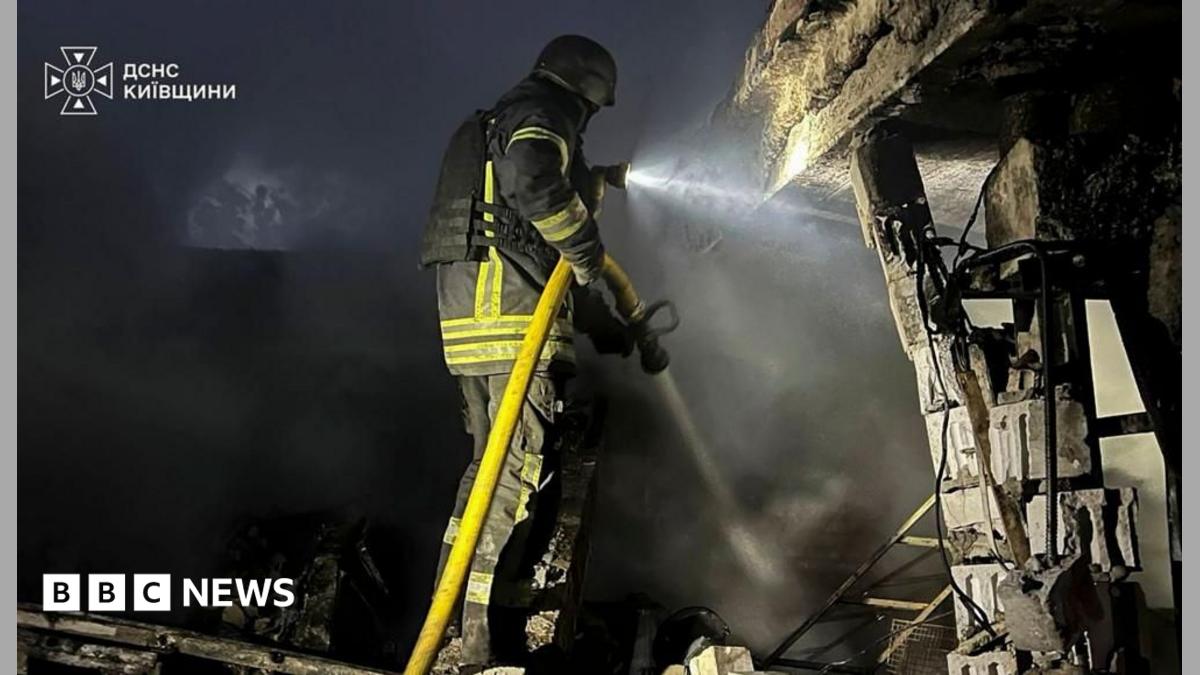
Russia has carried out its most extensive assault on Ukraine's energy infrastructure in months, with Ukrainian Prime Minister Serhiy Koretskyi confirming that the overnight barrage primarily focused on Kyiv and the surrounding region. The coordinated attack, which unfolded over several hours, represents a significant escalation in Moscow's ongoing campaign against Ukraine's critical civilian infrastructure as the country braces for another punishing winter.
According to local authorities, at least six people were killed and 33 others injured across multiple regions of Ukraine during the overnight strikes. Among the dead was a child whose body was discovered beneath the rubble of a destroyed house in the Kyiv region, according to Timur Tkachenko, the regional governor. The toll underscored the deadly consequences of the attack, which struck residential areas alongside energy facilities.
The Russian defence ministry stated that one of its intended targets was the Trypilska power station, described as the largest single supplier of electricity to the Ukrainian capital. Ukrainian officials have not confirmed this claim, and the full extent of the damage to the facility remains unclear. The plant's significance cannot be overstated, as it plays a central role in keeping Kyiv powered, particularly during the coldest months of the year.
In a statement posted on Telegram, Prime Minister Koretskyi described the scale of the assault in stark terms, noting that while Ukraine's energy infrastructure has faced near-daily attacks since the summer, a mass and combined operation of this magnitude had not occurred since the end of the previous heating season. His remarks highlighted the persistent and grinding nature of Russia's strategy to degrade Ukraine's ability to provide basic services to its population.
The attack affected 11 regions across the country, according to Koretskyi, with residential buildings, social infrastructure, civilian enterprises, and railway networks also coming under fire. Ukrainian President Volodymyr Zelensky specifically identified strikes on critical infrastructure in the Zhytomyr, Mykolaiv, Kirovohrad, and Rivne regions, illustrating the geographically dispersed nature of the assault.
Ukraine's largest private energy company, DTEK, reported that power had been restored to 8,000 homes following what it described as a difficult night for the capital. The energy ministry confirmed that some households in the Kyiv, Dnipropetrovsk, Donetsk, Sumy, and Kharkiv regions remained without electricity on Wednesday, leaving thousands of civilians to cope with the disruption.
State-owned grid operator Ukrenergo issued guidance urging residents to avoid using high-powered electrical appliances between 10:00 and 16:00 local time, as electricity supplies remained below normal levels. Such advisories have become a familiar feature of life in wartime Ukraine, where the national power grid operates under constant strain and the threat of renewed strikes.
In Kyiv itself, residents woke to a city shrouded in thick, acrid smoke after a night punctuated by the sound of explosions. An air raid alert remained in effect as the distant echo of air defence gunfire reverberated through the hazy atmosphere. Authorities in several districts advised people to keep their windows closed until the smoke dissipated, a precaution aimed at limiting exposure to harmful airborne particles released by the strikes.
Kyiv Mayor Vitali Klitschko said three people were killed in the capital, including a worker for a Ukrainian utility company who died at a warehouse building. It was not immediately clear whether the three fatalities he referenced included the child identified by the regional governor, highlighting the confusion that often accompanies the immediate aftermath of large-scale attacks.
Beyond the capital, two people were killed in the north-eastern Sumy region, according to Governor Oleh Hryhorov, while acting regional governor Heorhiy Reshetilov confirmed another fatality in the Mykolaiv region. The scattered death toll across different parts of the country reflected the wide-reaching scope of the operation and the difficulties Ukrainian emergency services face in accounting for all victims in the chaos that follows.
The attack fits a pattern that has defined Russia's approach to the war during the colder months. Since Moscow launched its full-scale invasion in February 2022, Ukraine has endured repeated wintertime campaigns aimed at crippling its energy grid, leaving millions without heat, light, and running water for extended periods. Each successive assault has forced Ukrainian engineers and utility crews to undertake rapid, often dangerous repairs under the threat of further strikes.
Analysts have long argued that Russia's targeting of energy infrastructure is designed to break civilian morale and pressure the government in Kyiv by making life unbearable for ordinary citizens. However, the strategy has also drawn widespread international condemnation, with Western officials characterising such attacks as potential war crimes due to their disproportionate impact on civilian populations and essential services.
The timing of the latest assault is particularly concerning, as Ukraine approaches the winter season with its energy system already weakened by months of sustained bombardment. The loss of the Trypilska power station, if confirmed, would represent a serious blow to Kyiv's electricity supply, potentially forcing authorities to implement rolling blackouts and further rationing measures to manage limited capacity.
Ukrainian officials have consistently called on Western allies to supply additional air defence systems to protect the country's skies, arguing that without sufficient interceptors, critical infrastructure will remain vulnerable to Russian missiles and drones. The latest attack is likely to intensify those appeals, particularly as European partners weigh the sustainability of their military support amid competing domestic priorities.
Moscow currently controls approximately 20% of Ukrainian territory, a figure that has remained relatively stable despite repeated offensives and counteroffensives along the front lines. Russian President Vladimir Putin's decision to launch the invasion nearly four years ago has resulted in tens of thousands of deaths, the displacement of millions, and the destruction of vast swathes of Ukrainian industry and infrastructure.
As Ukrainian crews work to restore power and emergency services continue searching through rubble, the human cost of the overnight strikes continues to emerge. The deaths of civilians, including a child, serve as a somber reminder that behind each strategic calculation lies a trail of individual tragedy that no military objective can justify. For the people of Kyiv and beyond, the coming days will bring uncertainty, hardship, and the grim knowledge that further attacks may follow.








Comments (0)