

France Suspends Stun Grenades in School Protests After Teenager Loses Hand in Lens
France has halted the deployment of stun grenades in the policing of student protests sweeping the country, following an incident earlier this week in which a 15-year-old boy lost
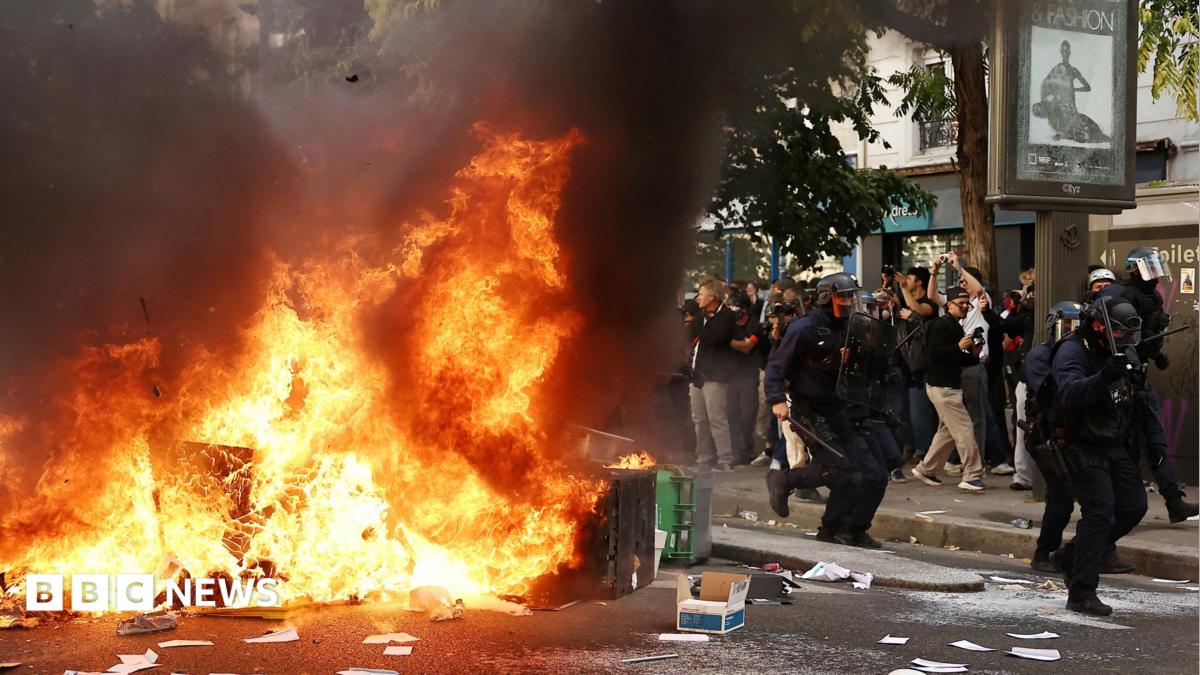
France has halted the deployment of stun grenades in the policing of student protests sweeping the country, following an incident earlier this week in which a 15-year-old boy lost his hand. Interior Minister Laurent Nuñez announced the suspension, saying he wanted the facts of Monday's event in the northern city of Lens to be fully established before the weapon is used again.
The pause comes amid sharply conflicting accounts of what happened near the Auguste Béhal high school. Authorities maintain that the teenager picked up a so-called anti-encirclement grenade and that it detonated in his hand. Students who witnessed the episode allege instead that an officer fired the device directly at him. The local prefect said police had been confronting a group of 200 to 250 young people who were throwing stones and fireworks at the time.
Nuñez told French radio station RTL that the IGPN, the national police watchdog, has opened 18 investigations into whether officers behaved proportionately during the demonstrations. He singled out the Lens case as one that "raises questions for all of us within the Ministry of the Interior", and confirmed that stun grenades would remain out of use until the circumstances are clarified. The weapon, which is officially classified as non-lethal, releases small rubber pellets when it detonates.
The unrest has spread well beyond its original base. What began in mid-September as a movement among high school pupils over conditions in their schools has grown to include parents, university students and trade unions. More than 6,500 people have been stopped or arrested since the protests began, according to the interior ministry. On Tuesday alone, hundreds of thousands marched, with tear gas and water cannon deployed in some cities. Officials put the crowd at over 250,000, while student unions claimed as many as 450,000.
Rioting on Tuesday also brought a heavy toll. The interior ministry reported that 488 people were arrested and 43 security force members were injured during the day's events, which saw fires lit in the streets of the capital. Prime Minister Sébastien Lecornu condemned violence at some of the gatherings and noted that, since mid-September, 215 students, 85 staff and 715 police officers had been hurt. He is scheduled to deliver an evening address on the school protests on Wednesday.
Disruption continued into Wednesday, with more than 500 schools fully or partially shut. Government figures indicate that almost a quarter of all lycées were affected by Tuesday's action. President Emmanuel Macron convened an emergency meeting late on Tuesday with Lecornu and other senior ministers to seek a way out of the crisis, underscoring the political pressure the unrest has generated for the administration.
Concern has been further inflamed by other cases of alleged excessive force. Last week, a 14-year-old boy was struck in the face by a tear gas grenade at Saint-Ouen-l'Aumône, north-west of Paris. His lawyer said he lost several teeth and suffered a fractured jaw, and a police officer has since been charged in connection with the incident. On Wednesday, prosecutors said an attempted murder investigation had been opened after a 17-year-old protester alleged that an officer held his head underwater while attempting to arrest him near a river in the north-eastern city of Belfort.
Nuñez sought to project a message of restraint and reassurance. He said that whenever disproportionate force is suspected, judicial investigations follow, and insisted the government is "here to protect high school students". Yet the scale of the investigations and the political fallout suggest that message will face heavy scrutiny from protesters, unions and the public.
Student leaders have made their demands clear. Ryad Rani, who heads the USL high school union, told French radio on Wednesday: "We are telling M. Nuñez, calm your police officers down and call for restraint." Unions have also announced a fourth round of protests is planned for Thursday in Paris and other cities, signalling that the movement is not losing momentum despite the government's concessions.
For the government, the suspension of stun grenades represents a limited tactical retreat rather than a resolution. The core grievances that sparked the protests, including overcrowded classrooms, teacher shortages and deteriorating school buildings, remain unaddressed. Many students also cite timetables and overheated classrooms during this year's heatwaves as triggers for the initial demonstrations, which began in the Île-de-France region around Paris before spreading nationwide.
The coming days are likely to prove decisive. Thursday's planned marches will test whether the suspension helps lower the temperature or whether further confrontations produce new flashpoints. Lecornu's address may set out fresh measures to respond to students' demands, while the outcome of the IGPN inquiries will shape how the public judges the conduct of the police.
France has a long and combustible tradition of street protest, and the involvement of schoolchildren gives this wave a particular political sensitivity. Images of injured teenagers and allegations of disproportionate force risk broadening sympathy for the movement, much as earlier controversies over policing methods have done in the past.
With almost a quarter of lycées disrupted, hundreds arrested and injuries mounting on all sides, the crisis has become one of the most serious domestic challenges the Macron government has faced in recent months. Whether the suspension of stun grenades proves a turning point or merely a pause will depend on whether the underlying issues in France's schools are confronted, and whether both sides can step back from the confrontations that have defined the past three weeks.
What's Your Reaction?
 Like
0
 Dislike
0
 Love
0
 Funny
0
 Wow
0
 Sad
0
 Angry
0

Reporter Senior. Meliput dinamika politik nasional, kebijakan publik, dan isu parlemen selama 8 tahun. Alumni FISIP UI.





Comments (0)